
Politics
Oregon Republicans Stage Walkout Ahead of Key Transportation Vote

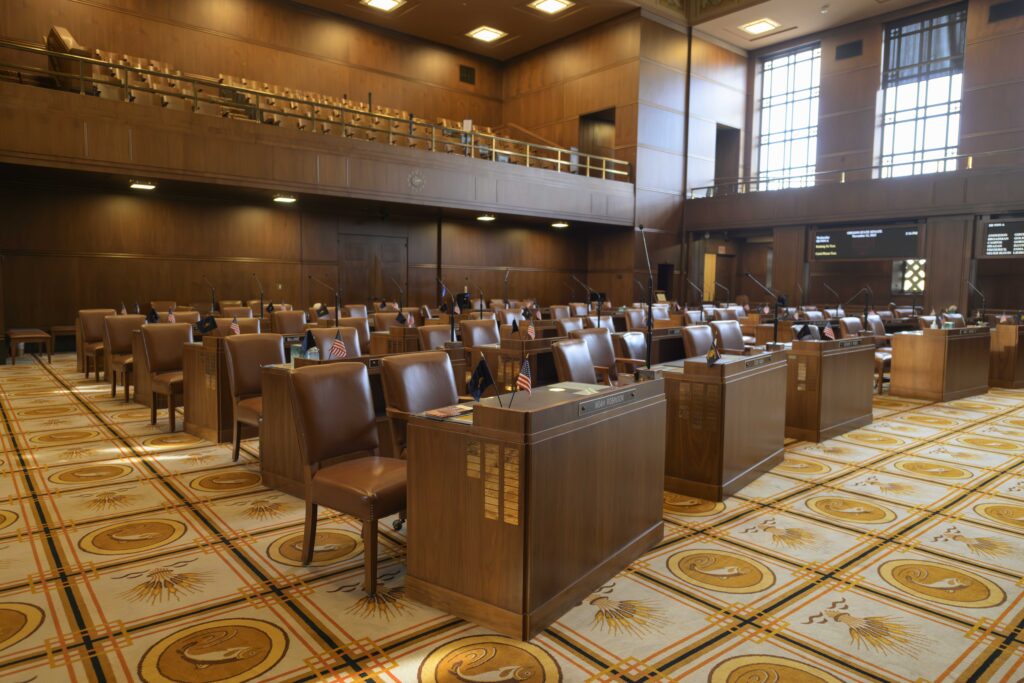
Republican senators in Oregon walked out of the Senate on the afternoon of February 18, 2026, effectively stalling a vote on a bill that sought to reschedule a referendum on a controversial transportation tax and fee increase. The scheduled meeting at 1:30 p.m. saw no Republican senators present during the roll call, prompting Senate President Rob Wagner, a Democrat from Lake Oswego, to adjourn the session until the following morning.
The legislation in question, Senate Bill 1599, aims to shift the date of the referendum from November to May. This proposal has been placed on the Senate agenda for February 19. While the Senate experienced a standstill, four Republican members attended the House session, allowing that chamber to achieve a quorum necessary for legislative action.
A spokesperson for Wagner did not provide immediate comments regarding the walkout. The absence of Republican senators was not specifically attributed to the transportation vote; however, Ashley Kuenzi, a spokesperson for Senate Republicans, indicated that the party aimed to facilitate more meaningful discussions between the majority and minority parties.
The ongoing transportation referendum has become a contentious issue, highlighting concerns over affordability in Oregon. Republicans have criticized the Democratic leadership for passing a range of tax increases, including hikes in the gas tax, car registration fees, and a payroll tax for public transit. The revenue generated from these new taxes is projected to raise $791 million for the Oregon Department of Transportation’s budget for 2025-27 and an estimated $4.3 billion over the next decade.
Republicans have launched the “No Tax Oregon” campaign, successfully gathering enough signatures to pause these tax increases until a referendum can take place in November. They argue that the Democratic push to reschedule the vote is a strategy to prevent the unpopular measure from being on the same ballot as Governor Tina Kotek and other Democratic legislators during the general election.
The timeline for passing legislation that alters the referendum date is critical. The Oregon Secretary of State’s Office has suggested that the measure requires an emergency clause and the signature from Governor Kotek by February 25. House Speaker Julie Fahey, a Democrat from Eugene, expressed confidence on Tuesday evening that the bill is on track to meet this deadline.
Oregon’s legislative process requires a two-thirds majority for members to deliberate and pass bills, a higher threshold than in most states where a simple majority suffices. In the Oregon Senate, where Democrats hold 18 of the 30 seats, at least 20 members must be present to conduct business. Similarly, the House requires 40 out of 60 representatives to be present.
The walkout tactic has been employed by Republicans in the predominantly Democratic legislature as a means to impede legislation. Notably, if Republican legislators accumulate ten or more unexcused absences, a constitutional amendment passed by voters in 2022 prevents them from seeking reelection.
The political backdrop includes a previous six-week walkout by Republican senators in 2023, which was aimed at opposing Democratic bills concerning abortion, gender-affirming care, and gun control. This year, three Republican senators—Cedric Hayden, Kim Thatcher of Keizer, and Suzanne Weber of Tillamook—are ineligible to run for reelection after participating in that earlier protest.
Last year, several Republicans boycotted a session in the Oregon House, although they were unable to prevent a quorum from being established. Tensions have also flared in the legislature, as evidenced by a heated exchange between Senator Chris Gorsek, a Democrat from Gresham, and Representative Shelly Boshart Davis, a Republican from Albany, during a committee hearing on transportation funding.
In the House, deliberations were temporarily halted but resumed as key Republican representatives arrived, allowing the chamber to reach a quorum. The legislation under consideration ultimately passed with a vote of 36-4.
As the situation develops, both parties will have to navigate the complexities of Oregon’s legislative requirements while addressing the pressing concerns of constituents regarding transportation funding and taxes.

Moyes Faces Referee Controversy Ahead of Everton vs Chelsea Clash

Man Hospitalised After Assault Outside Shop in Sandwell

Fred MacAulay and Ally McCoist Reunite for Special World Cup Show

NoOnes Targets $1 Trillion Gift Card Market to Enhance Crypto Access

Beloved Actor Matt Clark Passes Away at 89, Fans Mourn Loss

Discover How Milk Thistle Supplements Enhance Liver Health

Irish Community Care Celebrates 60 Years of Support in Liverpool

New Affordable Housing Development Planned for Crawley Site

Millions of Parking Tickets Issued Amid Calls for Reform

Claire Tomlinson Bids Farewell to Sky Sports After 27 Years

Iconic 90s TV Show House Hits Market for £1.1 Million

Tributes Flow for Kerry Gentle, Beloved RNLI Volunteer and Artist

Nathan Cleary’s Family Celebrates Engagement Amid Romance Rumors

Milk Bank Urges Mothers to Donate for Premature Babies’ Health

Shoppers Flock to Discounted Neck Pillow on Amazon for Travel Comfort

Alessia Russo Signs Long-Term Deal with Arsenal Ahead of WSL Season

Nuneaton Town FC Advances Plans for New Stadium in Stockingford

Museums Body Critiques EHRC Proposals on Gender Facilities
-
 Lifestyle6 months ago
Claire Tomlinson Bids Farewell to Sky Sports After 27 Years
-
 Entertainment9 months ago
Iconic 90s TV Show House Hits Market for £1.1 Million
-
 Lifestyle6 months ago
Tributes Flow for Kerry Gentle, Beloved RNLI Volunteer and Artist
-
 Sports11 months ago
Nathan Cleary’s Family Celebrates Engagement Amid Romance Rumors
-
 Lifestyle11 months ago
Milk Bank Urges Mothers to Donate for Premature Babies’ Health
-
 Lifestyle11 months ago
Shoppers Flock to Discounted Neck Pillow on Amazon for Travel Comfort
-
 Sports10 months ago
Alessia Russo Signs Long-Term Deal with Arsenal Ahead of WSL Season
-
 Sports8 months ago
Nuneaton Town FC Advances Plans for New Stadium in Stockingford
-
 Politics11 months ago
Museums Body Critiques EHRC Proposals on Gender Facilities
-

 Lifestyle11 months ago
Exploring England’s Cathedrals: A Journey Through History and Architecture
-

 Business11 months ago
Trump Visits Europe: Business, Politics, or Leisure?
-

 Lifestyle11 months ago
Japanese Teen Sorato Shimizu Breaks U18 100m Record in 10 Seconds