
Science
Astronomers Discover Black Hole Formed Quietly in Andromeda

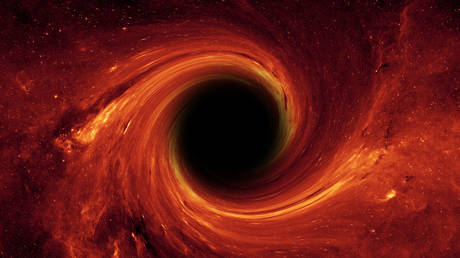
A team of astronomers has identified a black hole in the Andromeda galaxy that formed without the explosive event typically associated with such cosmic entities. The black hole, designated M31-2014-DS1, was observed to transform from a massive star approximately 13 times the mass of the Sun. This significant finding challenges existing theories about stellar evolution, suggesting that not all black holes are born from spectacular supernova explosions.
Kishalay De, an astronomer at Columbia University, led the research team that presented these findings in a paper published in Science magazine. The team posits that M31-2014-DS1 underwent a more subdued transformation, recorded by NASA’s NEOWISE mission. This star, located in the Andromeda galaxy, about 2.5 million light-years from Earth, displayed unusual brightness in the infrared spectrum in 2014, which sharply diminished by 2016 and nearly disappeared by 2023.
The researchers propose that the absence of a typical supernova event indicates that the star’s outer layers did not achieve the necessary velocity to escape the gravitational pull of the newly formed black hole. This quiet formation provides a unique opportunity to study the lifecycle of massive stars in a manner previously considered implausible. De remarked, “Ten years ago, if someone said a 13 solar-mass star would turn into a black hole, nobody would believe that. It was completely outside what was considered the norm.”
Black holes are known for their immense gravitational forces, which prevent even light from escaping. Despite this, their presence can be inferred through the distortion of space-time and the radiation emitted by matter as it falls into them. In the case of M31-2014-DS1, a faint infrared glow remains detectable, generated by a dust cloud surrounding the black hole. Sensitive instruments, including the James Webb Space Telescope, are essential for observing this phenomenon.
As the surrounding dust cloud dissipates, the team anticipates that X-rays from the obscured accretion disk will become observable, providing further evidence for their hypothesis. De stated, “This is essentially as close as we can get to seeing the death of a massive star. In the end, I think it teaches us a lot more about stellar physics by not exploding.”
The discovery of M31-2014-DS1 not only expands our understanding of black hole formation but also raises new questions about the nature of stellar evolution. It highlights the complexities of cosmic phenomena and offers insights into the life cycles of massive stars that do not conform to traditional expectations. As research continues, astronomers hope to unravel more mysteries surrounding these enigmatic objects, transforming our comprehension of the universe.

Moyes Faces Referee Controversy Ahead of Everton vs Chelsea Clash

Man Hospitalised After Assault Outside Shop in Sandwell

Fred MacAulay and Ally McCoist Reunite for Special World Cup Show

NoOnes Targets $1 Trillion Gift Card Market to Enhance Crypto Access

Beloved Actor Matt Clark Passes Away at 89, Fans Mourn Loss

Discover How Milk Thistle Supplements Enhance Liver Health

Irish Community Care Celebrates 60 Years of Support in Liverpool

New Affordable Housing Development Planned for Crawley Site

Millions of Parking Tickets Issued Amid Calls for Reform

Claire Tomlinson Bids Farewell to Sky Sports After 27 Years

Iconic 90s TV Show House Hits Market for £1.1 Million

Nathan Cleary’s Family Celebrates Engagement Amid Romance Rumors

Tributes Flow for Kerry Gentle, Beloved RNLI Volunteer and Artist

Milk Bank Urges Mothers to Donate for Premature Babies’ Health

Shoppers Flock to Discounted Neck Pillow on Amazon for Travel Comfort

Alessia Russo Signs Long-Term Deal with Arsenal Ahead of WSL Season

Nuneaton Town FC Advances Plans for New Stadium in Stockingford

Exploring England’s Cathedrals: A Journey Through History and Architecture
-
 Lifestyle8 months ago
Claire Tomlinson Bids Farewell to Sky Sports After 27 Years
-
 Entertainment11 months ago
Iconic 90s TV Show House Hits Market for £1.1 Million
-
 Sports1 year ago
Nathan Cleary’s Family Celebrates Engagement Amid Romance Rumors
-
 Lifestyle8 months ago
Tributes Flow for Kerry Gentle, Beloved RNLI Volunteer and Artist
-
 Lifestyle1 year ago
Milk Bank Urges Mothers to Donate for Premature Babies’ Health
-
 Lifestyle1 year ago
Shoppers Flock to Discounted Neck Pillow on Amazon for Travel Comfort
-
 Sports12 months ago
Alessia Russo Signs Long-Term Deal with Arsenal Ahead of WSL Season
-
 Sports9 months ago
Nuneaton Town FC Advances Plans for New Stadium in Stockingford
-
 Lifestyle1 year ago
Exploring England’s Cathedrals: A Journey Through History and Architecture
-

 Politics1 year ago
Museums Body Critiques EHRC Proposals on Gender Facilities
-

 Business1 year ago
Trump Visits Europe: Business, Politics, or Leisure?
-

 Lifestyle1 year ago
Japanese Teen Sorato Shimizu Breaks U18 100m Record in 10 Seconds