
Science
Harvard’s Avi Loeb Investigates Anomalies in Comet 3I/ATLAS

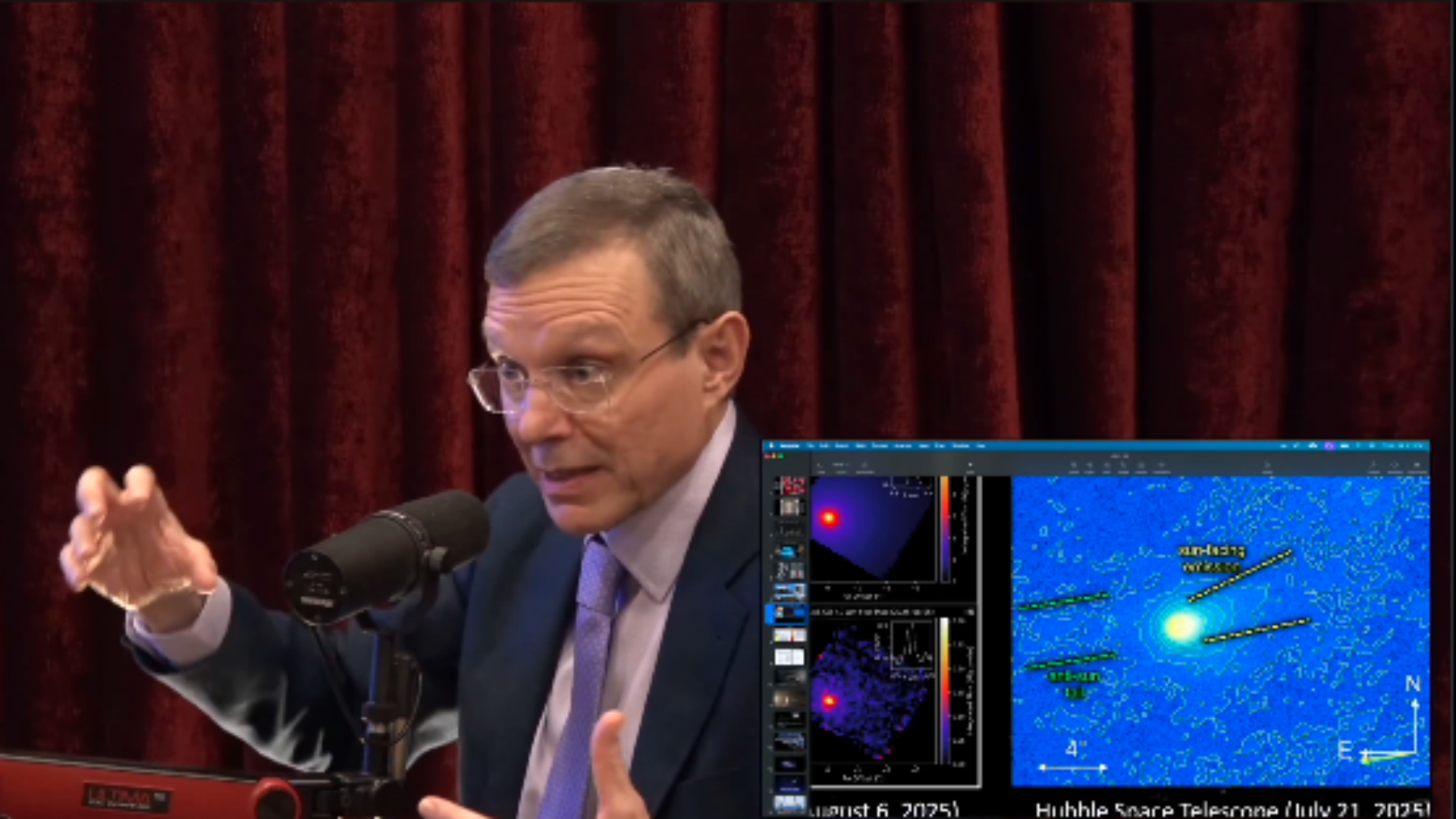
When the interstellar object ‘Oumuamua passed through our solar system in 2017, it prompted significant scientific inquiry and debate. Now, Avi Loeb, an astrophysicist at Harvard University, is directing attention towards another celestial enigma: comet 3I/ATLAS. This object, discovered on July 1, 2025, by the ATLAS survey telescope in Chile, is exhibiting behaviors that challenge existing astronomical models and deepen our understanding of such extrasolar entities.
3I/ATLAS, measuring approximately 20 kilometers in diameter, has ignited discussions in the scientific community due to its unexpected activity. Loeb’s recent research indicates that the comet is emitting a ‘sunward jet,’ a phenomenon where material is expelled towards the sun, contrary to the typical behavior of comets that generally release jets away from solar radiation. This anomaly raises important questions regarding the physical properties of 3I/ATLAS, especially considering that the jet appears to consist of unusually large particles.
Loeb explains that solar radiation pressure usually dispels larger particles, suggesting that the presence of this sunward jet signifies a need for a reassessment of the forces affecting these objects in space. Observations from the Hubble Space Telescope in July 2025 confirmed the existence of this ‘anti-tail,’ which remained consistent even after the comet’s trajectory shifted by 16 degrees during its perihelion passage. This stability indicates that the jet is a genuine physical characteristic rather than an optical illusion.
The implications of these findings extend beyond the comet itself. If 3I/ATLAS contains significantly larger particles, it may imply a distinct structural integrity and geological history compared to the conventional ‘dirty snowballs’ that are typically studied. Moreover, chemical analyses have revealed a strikingly high nickel-to-iron ratio and nickel-to-cyanide ratio in the comet’s gas plume, suggesting a composition more akin to industrial alloys than to natural cosmic ice.
Loeb’s observations challenge existing notions not only about 3I/ATLAS but also about all interstellar objects. He posits that these visitors, whether they are remnants of distant planetary systems or something more unusual, offer a unique opportunity to study the chemical makeup of other stars from within our own solar neighborhood. The significance of such findings encourages astronomers to reconsider and refine their models regarding the forces at play in the vacuum of space.
Interestingly, Loeb has calculated a mere 0.0025 percent likelihood that such a precisely directed sunward jet would occur by chance. This leads him to speculate whether the jet might serve as a means of propulsion or as a mechanism to clear micrometeorites. While some critics argue that his theories verge on sensationalism, Loeb remains dedicated to making complex scientific data accessible and challenging established perspectives.
“The diversity of interstellar objects might be much larger than we expected,” Loeb stated, emphasizing that each discovery, including 3I/ATLAS, acts as a crucial piece in a larger cosmic puzzle. As researchers focus on these anomalies, they aim to enhance detection systems, such as the forthcoming Vera C. Rubin Observatory, to identify such objects earlier in their trajectories.
As 3I/ATLAS neared its closest approach to Earth on December 19, 2025, passing at a distance of 268.91 million kilometers, projects like Breakthrough Listen even examined it for potential radio signatures indicative of artificial origins. The ongoing analysis of data from 3I/ATLAS suggests that our solar system is more dynamic and mysterious than previously understood.
Whether 3I/ATLAS represents a unique natural phenomenon or hints at something more structured, Avi Loeb’s research underscores the importance of curiosity in science. As this comet embarks on its journey out of our solar system, it leaves behind a wealth of data that could significantly alter our comprehension of the universe. Loeb’s work serves as a reminder that transformative discoveries often begin with the courage to ask, “What if?”

Moyes Faces Referee Controversy Ahead of Everton vs Chelsea Clash

Man Hospitalised After Assault Outside Shop in Sandwell

Fred MacAulay and Ally McCoist Reunite for Special World Cup Show

NoOnes Targets $1 Trillion Gift Card Market to Enhance Crypto Access

Beloved Actor Matt Clark Passes Away at 89, Fans Mourn Loss

Discover How Milk Thistle Supplements Enhance Liver Health

Irish Community Care Celebrates 60 Years of Support in Liverpool

New Affordable Housing Development Planned for Crawley Site

Millions of Parking Tickets Issued Amid Calls for Reform

Claire Tomlinson Bids Farewell to Sky Sports After 27 Years

Iconic 90s TV Show House Hits Market for £1.1 Million

Tributes Flow for Kerry Gentle, Beloved RNLI Volunteer and Artist

Nathan Cleary’s Family Celebrates Engagement Amid Romance Rumors

Milk Bank Urges Mothers to Donate for Premature Babies’ Health

Shoppers Flock to Discounted Neck Pillow on Amazon for Travel Comfort

Alessia Russo Signs Long-Term Deal with Arsenal Ahead of WSL Season

Nuneaton Town FC Advances Plans for New Stadium in Stockingford

Museums Body Critiques EHRC Proposals on Gender Facilities
-
 Lifestyle6 months ago
Claire Tomlinson Bids Farewell to Sky Sports After 27 Years
-
 Entertainment9 months ago
Iconic 90s TV Show House Hits Market for £1.1 Million
-
 Lifestyle6 months ago
Tributes Flow for Kerry Gentle, Beloved RNLI Volunteer and Artist
-
 Sports11 months ago
Nathan Cleary’s Family Celebrates Engagement Amid Romance Rumors
-
 Lifestyle11 months ago
Milk Bank Urges Mothers to Donate for Premature Babies’ Health
-
 Lifestyle11 months ago
Shoppers Flock to Discounted Neck Pillow on Amazon for Travel Comfort
-
 Sports10 months ago
Alessia Russo Signs Long-Term Deal with Arsenal Ahead of WSL Season
-
 Sports8 months ago
Nuneaton Town FC Advances Plans for New Stadium in Stockingford
-
 Politics11 months ago
Museums Body Critiques EHRC Proposals on Gender Facilities
-

 Lifestyle11 months ago
Exploring England’s Cathedrals: A Journey Through History and Architecture
-

 Business11 months ago
Trump Visits Europe: Business, Politics, or Leisure?
-

 Lifestyle11 months ago
Japanese Teen Sorato Shimizu Breaks U18 100m Record in 10 Seconds