
Science
Scientists Confirm 3I/ATLAS is Not an Alien Probe After Close Flyby

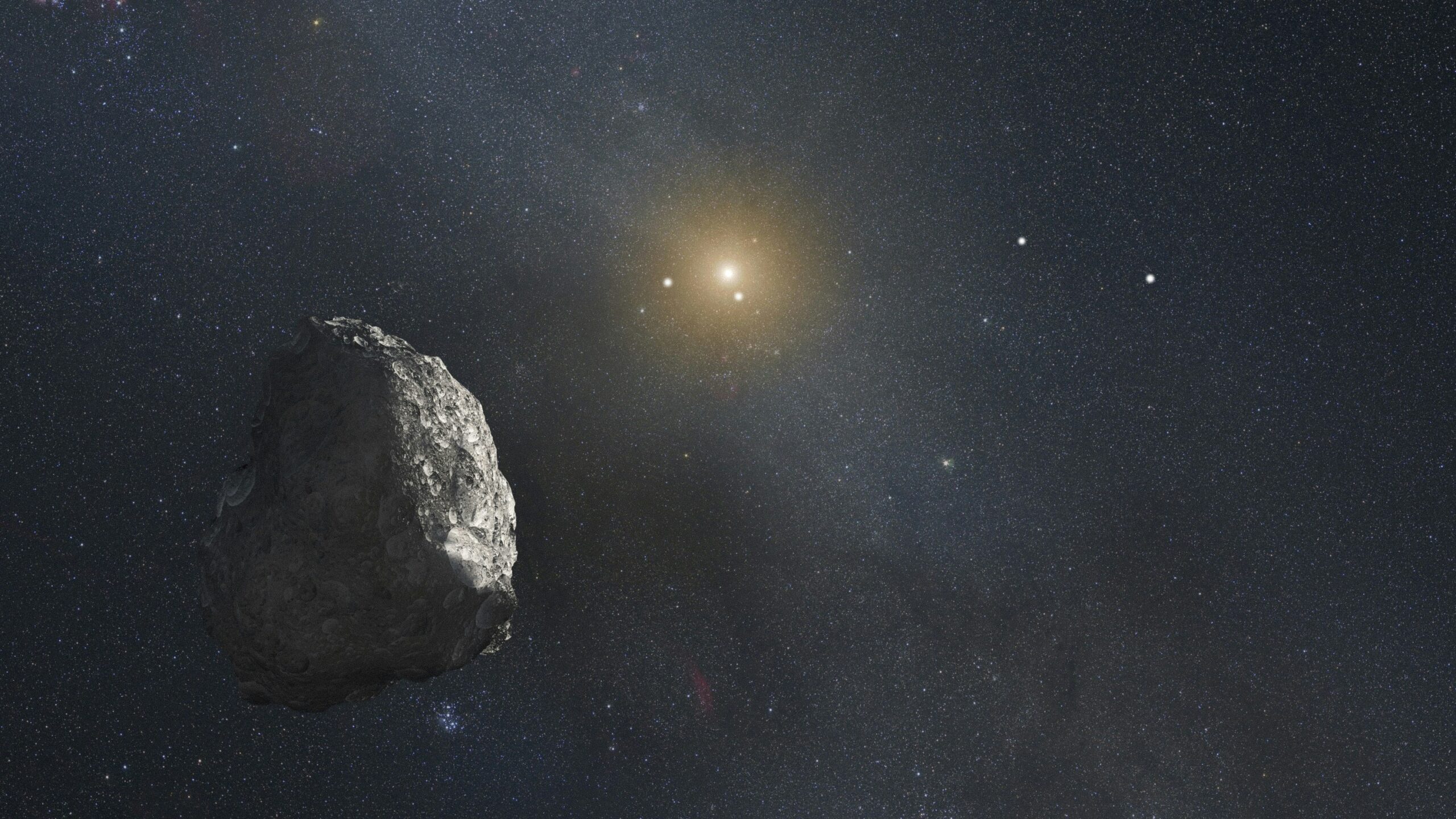
On December 19, 2025, the interstellar object known as 3I/ATLAS made its closest approach to Earth, sparking intense scientific scrutiny and speculation. Observers hoped to detect any signs of advanced technology from this enigmatic visitor, yet extensive searches yielded no evidence of artificial signals. The findings indicate that 3I/ATLAS, discovered in July 2025, is not an alien probe but rather a typical comet with characteristics aligning with natural celestial phenomena.
As 3I/ATLAS neared Earth at a distance of approximately 167 million miles (1.7 AU), the scientific community mobilized to search for potential technosignatures. The efforts were spearheaded by the Breakthrough Listen initiative, utilizing the Green Bank Telescope (GBT), the world’s largest steerable single-dish radio telescope. The GBT’s ability to detect signals with an Effective Isotropic Radiated Power (EIRP) as low as 0.1 watts made it an ideal instrument for identifying narrowband radio signals that could suggest extraterrestrial technology.
On December 18, just before the flyby, scientists scanned frequencies ranging from one to twelve GHz. Initial observations revealed nine ‘events of interest’; however, further analysis classified these signals as terrestrial interference rather than genuine emissions from 3I/ATLAS. The team concluded that there were no credible detections of narrowband radio technosignatures, effectively ruling out any form of communication with distant civilizations.
In their formal report, researchers stated, “We find no credible detections of narrowband radio technosignatures originating from 3I/ATLAS,” reinforcing that the object does not exhibit signs of advanced technological activity.
Understanding 3I/ATLAS: A Comet, Not a Probe
Following the radio silence, a more detailed examination of 3I/ATLAS has provided insights into its true nature. Data collected from various observatories, including the MeerKAT telescope in South Africa and the Hubble Space Telescope, has depicted the object as a standard interstellar comet, contrasting sharply with the mysterious characteristics of its predecessor, 1I/’Oumuamua.
Recent high-resolution imaging from the Gemini Multi-Object Spectrograph (GMOS) has unveiled a bright, asymmetric coma around 3I/ATLAS, confirming it as an active comet. This finding is significant, as hydroxyl signatures detected by MeerKAT suggest sunlight is breaking down water ice, while observations from the James Webb Space Telescope revealed high levels of carbon monoxide. These findings indicate that 3I/ATLAS formed in a frigid environment billions of years ago.
One of the most intriguing characteristics of 3I/ATLAS is its ‘anti-tail,’ a rare feature that points toward the Sun rather than away from it. This structure has been shown to host jet-like plumes that display a unique precessional wobble every 7 hours and 45 minutes. Contrary to speculation about artificial propulsion systems, these jets are natural, composed of water and gas, and provide a small, rocket-like push consistent with a nucleus approximately 1 kilometer in diameter.
NASA Associate Administrator Amit Kshatriya emphasized the findings during a press briefing held after the recent US government shutdown, stating, “This object is a comet. It looks and behaves like a comet, and all evidence points to it being a comet.”
As 3I/ATLAS embarks on its journey back into the depths of space, it will exit our solar system at an impressive speed of 153,000 miles per hour. Although it may not be the alien messenger some had hoped for, the data collected from this interstellar traveler offers a unique glimpse into the chemistry and dynamics of celestial objects from other star systems.
By March 2026, 3I/ATLAS will pass the orbit of Jupiter, gradually fading from view, and will cross the orbits of the outer planets by 2028 as it continues its voyage into the interstellar void. The lack of radio signals may disappoint those searching for extraterrestrial life, but the comet’s natural complexity reinforces a profound truth: the same laws of physics and chemistry that govern Earth are universal across the cosmos.

Moyes Faces Referee Controversy Ahead of Everton vs Chelsea Clash

Man Hospitalised After Assault Outside Shop in Sandwell

Fred MacAulay and Ally McCoist Reunite for Special World Cup Show

NoOnes Targets $1 Trillion Gift Card Market to Enhance Crypto Access

Beloved Actor Matt Clark Passes Away at 89, Fans Mourn Loss

Discover How Milk Thistle Supplements Enhance Liver Health

Irish Community Care Celebrates 60 Years of Support in Liverpool

New Affordable Housing Development Planned for Crawley Site

Millions of Parking Tickets Issued Amid Calls for Reform

Claire Tomlinson Bids Farewell to Sky Sports After 27 Years

Iconic 90s TV Show House Hits Market for £1.1 Million

Nathan Cleary’s Family Celebrates Engagement Amid Romance Rumors

Tributes Flow for Kerry Gentle, Beloved RNLI Volunteer and Artist

Milk Bank Urges Mothers to Donate for Premature Babies’ Health

Shoppers Flock to Discounted Neck Pillow on Amazon for Travel Comfort

Alessia Russo Signs Long-Term Deal with Arsenal Ahead of WSL Season

Nuneaton Town FC Advances Plans for New Stadium in Stockingford

Exploring England’s Cathedrals: A Journey Through History and Architecture
-
 Lifestyle8 months ago
Claire Tomlinson Bids Farewell to Sky Sports After 27 Years
-
 Entertainment11 months ago
Iconic 90s TV Show House Hits Market for £1.1 Million
-
 Sports1 year ago
Nathan Cleary’s Family Celebrates Engagement Amid Romance Rumors
-
 Lifestyle8 months ago
Tributes Flow for Kerry Gentle, Beloved RNLI Volunteer and Artist
-
 Lifestyle1 year ago
Milk Bank Urges Mothers to Donate for Premature Babies’ Health
-
 Lifestyle1 year ago
Shoppers Flock to Discounted Neck Pillow on Amazon for Travel Comfort
-
 Sports12 months ago
Alessia Russo Signs Long-Term Deal with Arsenal Ahead of WSL Season
-
 Sports9 months ago
Nuneaton Town FC Advances Plans for New Stadium in Stockingford
-
 Lifestyle1 year ago
Exploring England’s Cathedrals: A Journey Through History and Architecture
-

 Politics1 year ago
Museums Body Critiques EHRC Proposals on Gender Facilities
-

 Business1 year ago
Trump Visits Europe: Business, Politics, or Leisure?
-

 Lifestyle1 year ago
Japanese Teen Sorato Shimizu Breaks U18 100m Record in 10 Seconds