
Sports
Tensions Rise as Montenegro’s Minister Challenges Diplomatic Relations with Croatia

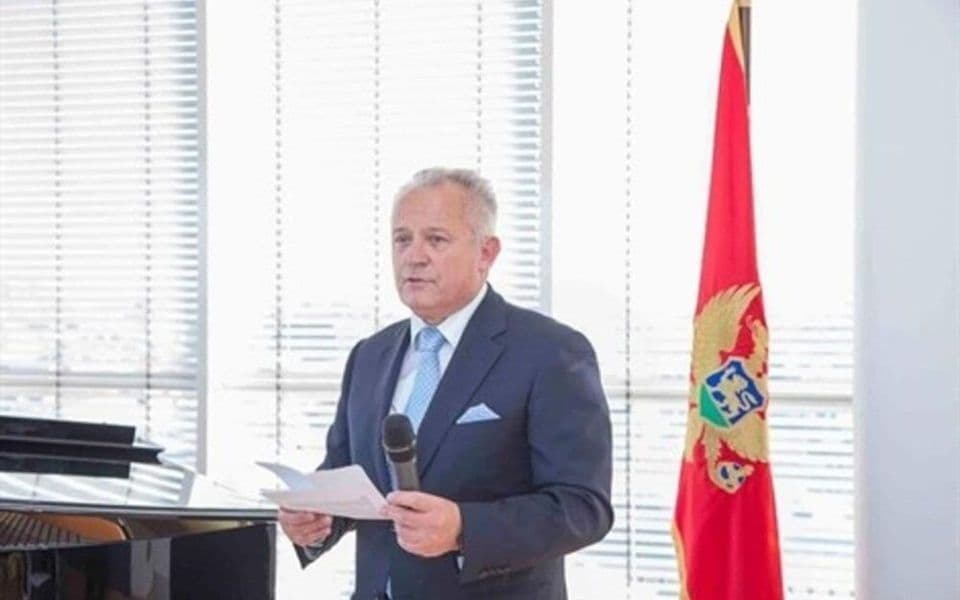
Montenegro’s diplomatic relations with Croatia are facing renewed scrutiny following remarks made by Ambassador Željko Perović. He criticized the government’s handling of the appointment of a commission head responsible for bilateral negotiations with Croatia, questioning why Prime Minister Milojko Spajić is not directly involved in the decision-making process. Perović’s comments come in light of reports that Minister of Defence Dragan Krapović will lead the Montenegrin delegation in talks concerning unresolved issues between the two nations.
In an interview with the newspaper Pobjeda, Perović expressed disbelief that such an important appointment would be settled through informal discussions among ministers rather than through the Prime Minister’s leadership. He emphasized the significance of the commission, particularly in relation to the ownership of the School Ship “Jadran,” which Montenegro maintains is legally its property.
Perović stated, “I can say that my colleague Ervin Ibrahimović and I have agreed that I should lead the commission and the Montenegrin delegation in dialogue.” He further asserted that Montenegro’s stance on the ship is “crystal clear” and will not change. Despite this, unofficial sources suggest that Krapović is only heading one of several committees formed to facilitate negotiations with Croatia, a body that falls under the Ministry of Defence’s jurisdiction.
Perović pointed out the potential implications of Krapović’s new role. He suggested two interpretations: the first being that Minister Ibrahimović’s decision might have been made without full awareness of its consequences; the second, more concerning interpretation, is that Krapović’s appointment could stem from deliberate strategic or personal motives, which could jeopardize Montenegro’s current and future diplomatic standing.
The ambassador underscored the unusual nature of the situation, questioning the absence of the foreign minister in such significant discussions. “Where is the Prime Minister in all of this? Two ministers should not be deciding on such appointments,” he remarked.
Perović’s comments reflect broader concerns regarding Krapović’s actions over the past year and a half, which have included several controversial moves that have provoked responses from the Croatian side. His provocations intensified after a June 21, 2023, agreement between the foreign ministers of Montenegro and Croatia, which formalized the transfer of the “Josip Marković” Cultural Centre to the Croatian minority in Tivat.
Krapović has since issued special insignia featuring the silhouette of the “Jadran” and attempted to distribute them during a government session. He also announced plans to protect the ship as a cultural heritage asset, actions that have raised eyebrows in Croatia.
The Croatian government responded diplomatically to these provocations, recalling a similar situation in mid-2024 when Montenegro’s parliament adopted a resolution regarding the genocide in Jasenovac. This led Croatia to declare several leaders from Montenegro’s ruling coalition as “persona non grata,” escalating tensions between the neighbors.
In response to the formation of the commission by the Croatian government in December 2024 to address issues related to the return of the “Jadran” and military asset succession, Perović noted, “It is perplexing that the Prime Minister is not actively engaged in these crucial negotiations.” The commission’s task is to provide the Croatian government with opinions and proposals regarding military asset succession, particularly the “Jadran,” which is part of the broader context of bilateral relations.
Admiral Dragan Samardžić, a retired officer, commented on the necessity of engaging recognized experts in international law to analyze the succession agreement from the former Yugoslavia critically. He emphasized that the commission established by Croatia signals a long-term, institutional approach to resolving these disputes, which could have significant implications for Montenegro’s European Union negotiations, especially regarding Chapter 31 on foreign relations and security.
As Montenegro navigates this delicate diplomatic landscape, Krapović’s involvement in upcoming negotiations raises questions about the potential for constructive dialogue with Croatia. Given the unresolved issues and historical tensions, many observers remain skeptical about the government’s ability to foster positive relations, especially with a minister whose previous actions have provoked significant backlash from Croatia.
The future of Montenegro’s EU accession and its diplomatic relations with Croatia may depend on how effectively it can manage these complexities and whether it can present a united front in negotiations.

Moyes Faces Referee Controversy Ahead of Everton vs Chelsea Clash

Man Hospitalised After Assault Outside Shop in Sandwell

Fred MacAulay and Ally McCoist Reunite for Special World Cup Show

NoOnes Targets $1 Trillion Gift Card Market to Enhance Crypto Access

Beloved Actor Matt Clark Passes Away at 89, Fans Mourn Loss

Discover How Milk Thistle Supplements Enhance Liver Health

Irish Community Care Celebrates 60 Years of Support in Liverpool

New Affordable Housing Development Planned for Crawley Site

Millions of Parking Tickets Issued Amid Calls for Reform

Claire Tomlinson Bids Farewell to Sky Sports After 27 Years

Iconic 90s TV Show House Hits Market for £1.1 Million

Nathan Cleary’s Family Celebrates Engagement Amid Romance Rumors

Tributes Flow for Kerry Gentle, Beloved RNLI Volunteer and Artist

Milk Bank Urges Mothers to Donate for Premature Babies’ Health

Shoppers Flock to Discounted Neck Pillow on Amazon for Travel Comfort

Alessia Russo Signs Long-Term Deal with Arsenal Ahead of WSL Season

Nuneaton Town FC Advances Plans for New Stadium in Stockingford

Exploring England’s Cathedrals: A Journey Through History and Architecture
-
 Lifestyle8 months ago
Claire Tomlinson Bids Farewell to Sky Sports After 27 Years
-
 Entertainment11 months ago
Iconic 90s TV Show House Hits Market for £1.1 Million
-
 Sports1 year ago
Nathan Cleary’s Family Celebrates Engagement Amid Romance Rumors
-
 Lifestyle8 months ago
Tributes Flow for Kerry Gentle, Beloved RNLI Volunteer and Artist
-
 Lifestyle1 year ago
Milk Bank Urges Mothers to Donate for Premature Babies’ Health
-
 Lifestyle1 year ago
Shoppers Flock to Discounted Neck Pillow on Amazon for Travel Comfort
-
 Sports12 months ago
Alessia Russo Signs Long-Term Deal with Arsenal Ahead of WSL Season
-
 Sports9 months ago
Nuneaton Town FC Advances Plans for New Stadium in Stockingford
-
 Lifestyle1 year ago
Exploring England’s Cathedrals: A Journey Through History and Architecture
-

 Politics1 year ago
Museums Body Critiques EHRC Proposals on Gender Facilities
-

 Business1 year ago
Trump Visits Europe: Business, Politics, or Leisure?
-

 Lifestyle1 year ago
Japanese Teen Sorato Shimizu Breaks U18 100m Record in 10 Seconds