
Top Stories
Diplomatic Tensions Rise as Montenegro Appoints Krapović for Talks with Croatia

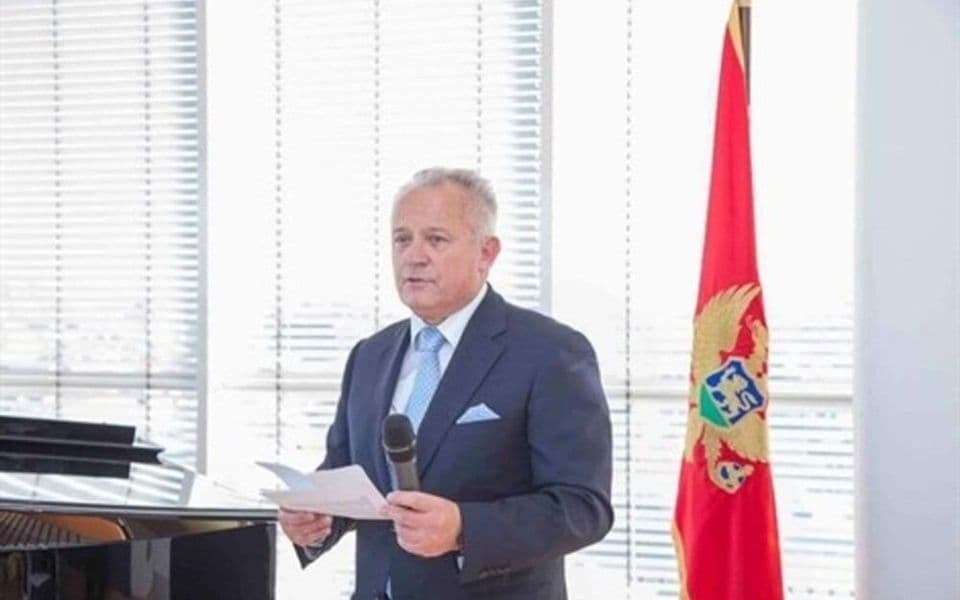
Diplomatic relations between Montenegro and Croatia are under scrutiny following the appointment of Dragan Krapović, a member of the Democratic Party, to lead the Montenegrin delegation in bilateral negotiations with Croatia. Ambassador Željko Perović expressed concern over the decision, stating that it undermines the role of Prime Minister Milojko Spajić, who should be directly involved in such critical appointments.
Perović’s remarks come in response to reports that Krapović will head one of several commissions established to facilitate discussions on outstanding issues between the two nations. He emphasized that the leadership of such a significant dialogue should not be determined solely by ministerial consensus. “It is incomprehensible that the Prime Minister is not engaging with this crucial matter,” Perović stated.
The ambassador clarified that the Commission for the Return of the School Ship “Jadran” was established by the Croatian government, making the involvement of Montenegrin officials even more critical. Perović criticized the lack of direct involvement from Spajić, pointing out that significant positions should not be decided by two ministers alone.
He expressed mixed feelings regarding Krapović’s new role, suggesting it could be interpreted in two ways. Optimistically, he viewed the appointment as possibly unintended. On the contrary, if the decision was made with deliberate intent to serve particular interests, it poses a more significant risk to Montenegro’s current and future diplomatic standing.
Perović’s concerns extend to the credibility of Krapović, who has previously been perceived as compromising relations with Croatia. He remarked, “It is perplexing that the Minister of Foreign Affairs would delegate such significant responsibilities to someone who has repeatedly jeopardized our relationship with Croatia.”
The formation of the commission itself stems from Croatia’s need to address the return of the School Ship “Jadran” and military property succession issues, which are prerequisites for closing Chapter 31 of the EU negotiation process. This chapter has been stalled since December 2024, and the newly formed body is tasked with creating recommendations on these matters, indicating that this issue remains a priority for both nations.
The commission is led by Croatia’s Foreign Minister Gordan Grlić Radman, with members from various ministries, including representatives from the Ministry of Foreign and European Affairs. Their objective is to draft opinions concerning military property succession and the return of the School Ship “Jadran” as part of ongoing bilateral discussions.
Retired Admiral Dragan Samardžić highlighted the importance of engaging recognized experts in international law to critically assess the succession agreement and Montenegro’s legal standing. He characterized the Croatian commission’s formation as a logical and necessary institutional response to previous handling of succession issues.
Krapović has been a controversial figure in recent months, known for actions that have provoked diplomatic tensions. His rhetoric intensified following the signing of a document by the Montenegrin and Croatian foreign ministers, which formalized the transfer of the “Josip Marković” Cultural Centre to the Croatian minority in Tivat.
The appointment of Krapović raises concerns about the potential for further strain on relations, particularly as it follows a series of inflammatory actions. These include attempts to protect the “Jadran” as a Montenegrin cultural heritage site and threats to remove memorials associated with the conflict.
The Croatian government has indicated that it will respond firmly to any actions perceived as detrimental to its interests. In past instances, such as the adoption of a resolution on genocide in Jasenovac by the Montenegrin Parliament, Croatia designated certain leaders of the ruling coalition as “persona non grata.”
In conclusion, the implications of Krapović’s appointment in the context of ongoing negotiations raise significant concerns about Montenegro’s diplomatic strategy. As the country seeks to advance towards EU membership, the involvement of a figure with a controversial track record in negotiations with Croatia may hinder progress on critical issues. The path forward will require careful navigation to ensure that diplomatic relations do not deteriorate further.

Moyes Faces Referee Controversy Ahead of Everton vs Chelsea Clash

Man Hospitalised After Assault Outside Shop in Sandwell

Fred MacAulay and Ally McCoist Reunite for Special World Cup Show

NoOnes Targets $1 Trillion Gift Card Market to Enhance Crypto Access

Beloved Actor Matt Clark Passes Away at 89, Fans Mourn Loss

Discover How Milk Thistle Supplements Enhance Liver Health

Irish Community Care Celebrates 60 Years of Support in Liverpool

New Affordable Housing Development Planned for Crawley Site

Millions of Parking Tickets Issued Amid Calls for Reform

Claire Tomlinson Bids Farewell to Sky Sports After 27 Years

Iconic 90s TV Show House Hits Market for £1.1 Million

Tributes Flow for Kerry Gentle, Beloved RNLI Volunteer and Artist

Nathan Cleary’s Family Celebrates Engagement Amid Romance Rumors

Milk Bank Urges Mothers to Donate for Premature Babies’ Health

Shoppers Flock to Discounted Neck Pillow on Amazon for Travel Comfort

Alessia Russo Signs Long-Term Deal with Arsenal Ahead of WSL Season

Nuneaton Town FC Advances Plans for New Stadium in Stockingford

Museums Body Critiques EHRC Proposals on Gender Facilities
-
 Lifestyle6 months ago
Claire Tomlinson Bids Farewell to Sky Sports After 27 Years
-
 Entertainment9 months ago
Iconic 90s TV Show House Hits Market for £1.1 Million
-
 Lifestyle7 months ago
Tributes Flow for Kerry Gentle, Beloved RNLI Volunteer and Artist
-
 Sports11 months ago
Nathan Cleary’s Family Celebrates Engagement Amid Romance Rumors
-
 Lifestyle11 months ago
Milk Bank Urges Mothers to Donate for Premature Babies’ Health
-
 Lifestyle11 months ago
Shoppers Flock to Discounted Neck Pillow on Amazon for Travel Comfort
-
 Sports10 months ago
Alessia Russo Signs Long-Term Deal with Arsenal Ahead of WSL Season
-
 Sports8 months ago
Nuneaton Town FC Advances Plans for New Stadium in Stockingford
-
 Politics11 months ago
Museums Body Critiques EHRC Proposals on Gender Facilities
-

 Lifestyle11 months ago
Exploring England’s Cathedrals: A Journey Through History and Architecture
-

 Business11 months ago
Trump Visits Europe: Business, Politics, or Leisure?
-

 Lifestyle11 months ago
Japanese Teen Sorato Shimizu Breaks U18 100m Record in 10 Seconds