
Top Stories
Oregon Legislators Face Tax Debate Amid Partisan Tensions

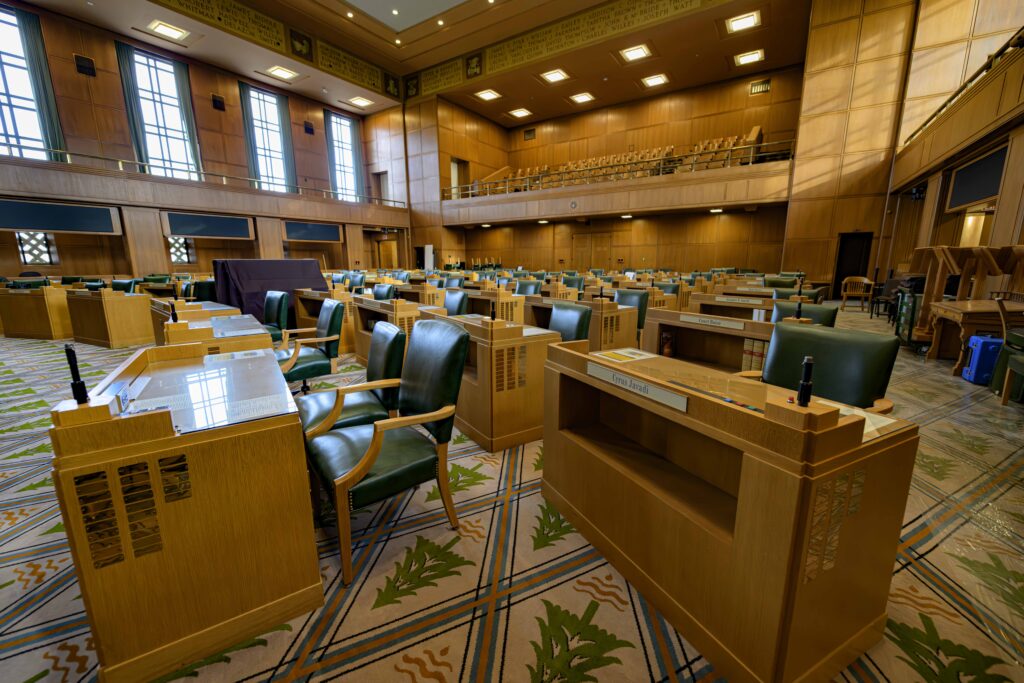
Oregon legislators are currently embroiled in a contentious debate over whether to disconnect from certain provisions of the 2025 federal tax law. This political struggle highlights a clash between fiscal conservatives advocating for states’ rights and the potential impact on average Oregonians. The outcome could significantly influence the state’s ability to generate fair revenue through its income tax system.
The current conflict revolves around a constitutional amendment passed in 1969, which allows the Oregon Legislature to automatically connect to changes in the definition of federal taxable income. While this provision was initially intended to simplify tax administration, it has led to significant fiscal challenges, particularly after Congress made changes that resulted in a budget deficit for Oregon in 1971. Following that experience, the Legislature opted to remove the automatic reconnect feature, allowing for more discretion in how federal tax changes were adopted.
Despite this caution, the 1997 Legislature reinstated the automatic reconnect, a decision that has since created ongoing fiscal issues. Since then, multiple sessions have failed to resolve the underlying problems, leading some to echo the sentiment of physicist Albert Einstein, who defined insanity as doing the same thing repeatedly but expecting different results.
In the wake of these fiscal challenges, the 2003 Legislature partially suspended the automatic reconnect, but no long-term solution has been enacted. As a result, congressional changes to the federal tax definition continue to apply in Oregon unless the Legislature actively decides to disconnect. This ongoing situation has prompted renewed calls for a legislative fix.
Legislative Action and Future Implications
The debate surrounding the 2025 federal tax provisions is likely to be fraught with political division, but there is also a pressing need for bipartisan collaboration. Legislators are encouraged to consider a standalone bill that would permanently end the practice of rolling reconnect. Such a measure would apply only to future federal changes and would not impact current state revenues. Consequently, it would require only a simple majority vote in both chambers to advance to Gov. Tina Kotek for approval.
Advocates argue that ending rolling reconnect aligns with the principles of fiscal conservatism and states’ rights, resonating with lawmakers across the political spectrum. The 1971 Legislature’s decision to cease automatic reconnection serves as a historical precedent that underscores the potential pitfalls of federal overreach into state tax policy.
The late Ellen Lowe, known as the “church lady of Oregon,” famously advised to “always reserve the right to be wiser tomorrow.” This wisdom remains relevant today as Oregon legislators contemplate their next steps in addressing tax policy that aligns with the state’s values and priorities.
The outcome of this legislative discussion could have far-reaching implications not only for Oregon’s fiscal health but also for its residents, who depend on a stable and equitable tax system. As the 2026 legislative session approaches, it remains to be seen whether lawmakers will heed the lessons of the past and make choices that will benefit all Oregonians moving forward.

Moyes Faces Referee Controversy Ahead of Everton vs Chelsea Clash

Man Hospitalised After Assault Outside Shop in Sandwell

Fred MacAulay and Ally McCoist Reunite for Special World Cup Show

NoOnes Targets $1 Trillion Gift Card Market to Enhance Crypto Access

Beloved Actor Matt Clark Passes Away at 89, Fans Mourn Loss

Discover How Milk Thistle Supplements Enhance Liver Health

Irish Community Care Celebrates 60 Years of Support in Liverpool

New Affordable Housing Development Planned for Crawley Site

Millions of Parking Tickets Issued Amid Calls for Reform

Claire Tomlinson Bids Farewell to Sky Sports After 27 Years

Iconic 90s TV Show House Hits Market for £1.1 Million

Tributes Flow for Kerry Gentle, Beloved RNLI Volunteer and Artist

Nathan Cleary’s Family Celebrates Engagement Amid Romance Rumors

Milk Bank Urges Mothers to Donate for Premature Babies’ Health

Shoppers Flock to Discounted Neck Pillow on Amazon for Travel Comfort

Alessia Russo Signs Long-Term Deal with Arsenal Ahead of WSL Season

Nuneaton Town FC Advances Plans for New Stadium in Stockingford

Museums Body Critiques EHRC Proposals on Gender Facilities
-
 Lifestyle6 months ago
Claire Tomlinson Bids Farewell to Sky Sports After 27 Years
-
 Entertainment9 months ago
Iconic 90s TV Show House Hits Market for £1.1 Million
-
 Lifestyle6 months ago
Tributes Flow for Kerry Gentle, Beloved RNLI Volunteer and Artist
-
 Sports11 months ago
Nathan Cleary’s Family Celebrates Engagement Amid Romance Rumors
-
 Lifestyle11 months ago
Milk Bank Urges Mothers to Donate for Premature Babies’ Health
-
 Lifestyle11 months ago
Shoppers Flock to Discounted Neck Pillow on Amazon for Travel Comfort
-
 Sports10 months ago
Alessia Russo Signs Long-Term Deal with Arsenal Ahead of WSL Season
-
 Sports8 months ago
Nuneaton Town FC Advances Plans for New Stadium in Stockingford
-
 Politics11 months ago
Museums Body Critiques EHRC Proposals on Gender Facilities
-

 Lifestyle11 months ago
Exploring England’s Cathedrals: A Journey Through History and Architecture
-

 Business11 months ago
Trump Visits Europe: Business, Politics, or Leisure?
-

 Lifestyle11 months ago
Japanese Teen Sorato Shimizu Breaks U18 100m Record in 10 Seconds