
Science
Robotic Hand Detaches, Crawls, and Reattaches: A Technological Breakthrough

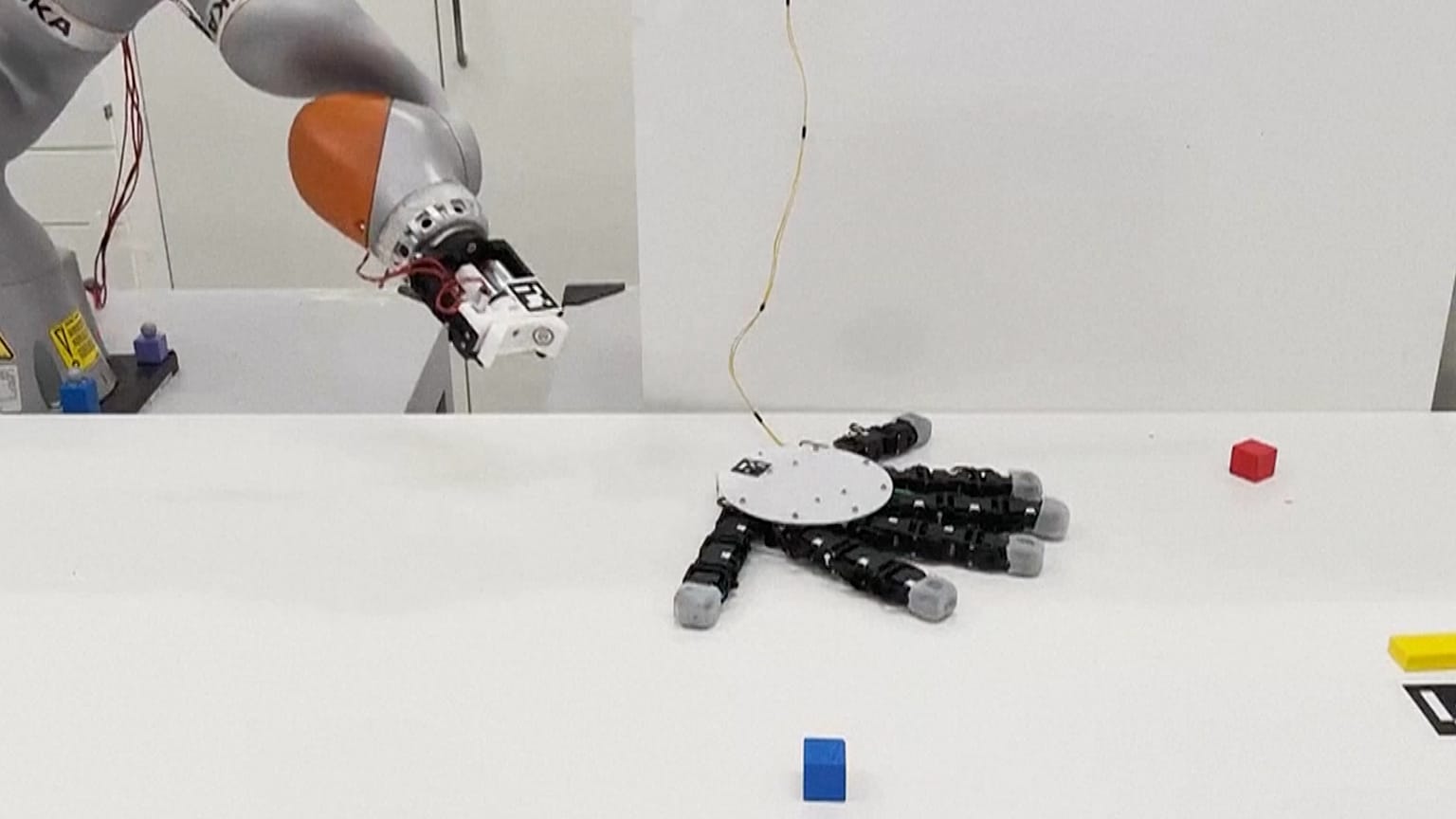
Researchers have developed an innovative robotic hand capable of detaching from its arm, crawling independently, and reattaching itself after retrieving objects. This technology, detailed in the journal Nature Communications, demonstrates a significant advancement in robotics, allowing the hand to mimic the dexterity of human grasping while surpassing some inherent limitations of the human anatomy.
The robotic hand can reproduce over 30 common grasp types and lift objects weighing up to two kilograms. Unlike traditional robotic hands that aim to replicate human functionality, this design seeks to enhance it. According to Kunpeng Yao, an assistant professor at the University of Leeds, the human hand has its constraints. “We think the human hand is not perfect… We have a lack of symmetry in the hand, and the hand can only perform a limited number of tasks due to the structure,” he stated.
Redefining Dexterity
The researchers propose a new paradigm for robotic hands. Traditional designs often include just one thumb, limiting the ways objects can be grasped. Co-author Aude Billard from EPFL in Switzerland raised an intriguing question: “Why having only one thumb? What if we had two or more?” This new approach allows for fingers to function as thumbs, enabling multiple grasping configurations.
The team created two versions of the hand: one featuring five fingers and the other with six. Both designs possess a symmetrical structure that facilitates grasping from either side of the palm. During tests, the hand successfully detached, crawled like a small multi-legged robot, and retrieved up to three objects in succession while maintaining a secure grip.
Potential Applications in Confined Spaces
The implications of this technology extend beyond simple object manipulation. Co-author Xiao Gao from the School of Robotics at Wuhan University in China highlighted potential applications in scenarios requiring access to tight spaces, such as industrial pipelines. “There are always some confined spaces inside of factories where you need a hand that can detach and go inside,” he noted. “This technology could be particularly useful in rescue situations or maintenance tasks.”
The research team is optimistic about the future of this technology, envisioning its use in a variety of challenging environments. The ability for a robotic hand to operate independently opens new avenues for automation and interaction in sectors ranging from manufacturing to emergency response.
This groundbreaking research not only highlights the evolving capabilities of robotics but also challenges existing paradigms regarding the design and functionality of robotic appendages. As developments continue, the potential for enhanced dexterity and application in real-world situations becomes increasingly promising.

Moyes Faces Referee Controversy Ahead of Everton vs Chelsea Clash

Man Hospitalised After Assault Outside Shop in Sandwell

Fred MacAulay and Ally McCoist Reunite for Special World Cup Show

NoOnes Targets $1 Trillion Gift Card Market to Enhance Crypto Access

Beloved Actor Matt Clark Passes Away at 89, Fans Mourn Loss

Discover How Milk Thistle Supplements Enhance Liver Health

Irish Community Care Celebrates 60 Years of Support in Liverpool

New Affordable Housing Development Planned for Crawley Site

Millions of Parking Tickets Issued Amid Calls for Reform

Claire Tomlinson Bids Farewell to Sky Sports After 27 Years

Iconic 90s TV Show House Hits Market for £1.1 Million

Nathan Cleary’s Family Celebrates Engagement Amid Romance Rumors

Tributes Flow for Kerry Gentle, Beloved RNLI Volunteer and Artist

Milk Bank Urges Mothers to Donate for Premature Babies’ Health

Shoppers Flock to Discounted Neck Pillow on Amazon for Travel Comfort

Alessia Russo Signs Long-Term Deal with Arsenal Ahead of WSL Season

Nuneaton Town FC Advances Plans for New Stadium in Stockingford

Exploring England’s Cathedrals: A Journey Through History and Architecture
-
 Lifestyle8 months ago
Claire Tomlinson Bids Farewell to Sky Sports After 27 Years
-
 Entertainment11 months ago
Iconic 90s TV Show House Hits Market for £1.1 Million
-
 Sports1 year ago
Nathan Cleary’s Family Celebrates Engagement Amid Romance Rumors
-
 Lifestyle8 months ago
Tributes Flow for Kerry Gentle, Beloved RNLI Volunteer and Artist
-
 Lifestyle1 year ago
Milk Bank Urges Mothers to Donate for Premature Babies’ Health
-
 Lifestyle1 year ago
Shoppers Flock to Discounted Neck Pillow on Amazon for Travel Comfort
-
 Sports12 months ago
Alessia Russo Signs Long-Term Deal with Arsenal Ahead of WSL Season
-
 Sports9 months ago
Nuneaton Town FC Advances Plans for New Stadium in Stockingford
-
 Lifestyle1 year ago
Exploring England’s Cathedrals: A Journey Through History and Architecture
-

 Politics1 year ago
Museums Body Critiques EHRC Proposals on Gender Facilities
-

 Business1 year ago
Trump Visits Europe: Business, Politics, or Leisure?
-

 Lifestyle1 year ago
Japanese Teen Sorato Shimizu Breaks U18 100m Record in 10 Seconds